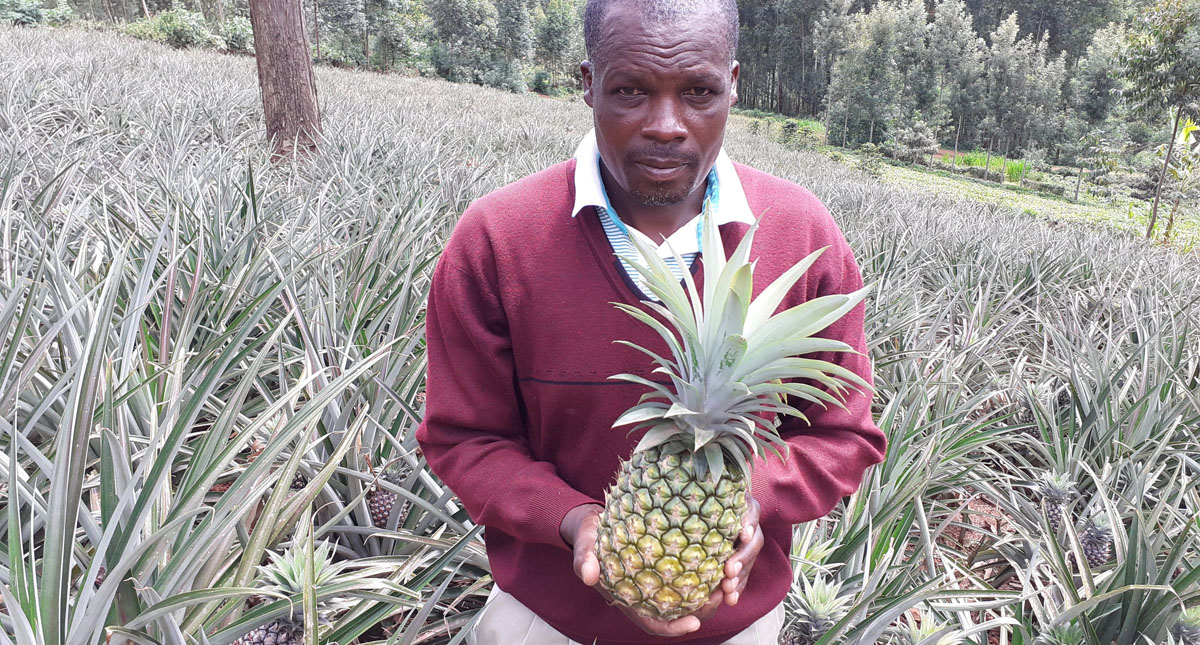
Pineapple farming in Kenya is a rewarding venture which farmers in Kenya should consider. At a time when studies shows that a majority of Kenyan small scale farmers continue being buffeted by market vagaries such as, market glut and lack of markets for their produces, Joseph Mwangi is struggling to meet the growing demand of his produce thanks to an emerging trend where grocers are preferring to buy directly from farmers within his region.
Pineapples have two peaks harvesting seasons per year; April to July and October to December. An acre piece of land when well densely planted can have 2,000 suckers. They retail according to sizes, medium sizes go for KSh50 and the bigger ones go for KSh70.
They mature in 15 to 24 months depending on the location. Those planted in hot areas matures faster than those planted in cooler areas.
Joseph runs his pineapple Farm in Nyeri County and supplies to groceries and stores which is offering him a steady and ready market as opposed to traders and middle men. Many farmers in Nyeri County have embraced pineapple farming and are juicing up their livelihoods, even as the cost of growing the produce continues to skyrocket.
His journey to pineapple farming began in 2005 when a USA based organization dubbed E-Fund intervened for farmers in this area, giving them grants, free suckers and the know how to grow pineapples. At the moment, his farm has diversified into value addition, producing juice and peels as animal fodder.
“When I started pineapple farming I used to harvest on order for traders who came from Nyeri Town and Nairobi. However, with time the buyers started becoming unreliable in terms of collecting the produce and making payments in time. This forced me to up my game something that has enabled me to acquire supply tenders with institutions and bigger retailers,” said Joseph Mwangi who is expanding his farming business to capture more schools, health institutions and supermarkets where demand for pineapples continue to soar.
To tap into more buyers and sustain the existing ones the farm offers free delivery within Nyeri Town. Mwangi has positioned his farm as a one stop center for guests in search of knowledge from far and within to visit. The farm provides free trainings for students both from high schools and tertiary institutes pursuing agriculture courses. In June last year after the lockdown was lifted, he received a group of farmers and their leaders from South Nyanza who were on a series of agricultural events and bench marking.
Salome Chepkemboi is another pineapple farmer in Kabiyet, Nandi County. She ventured into this farming in 2012 after discovering that most pineapples consumed in the area were being outsourced from neighboring country. “We sell the fruits depending on the size. The bigger ones fetch Ksh200 while those that are small in size retail at Ksh 80,’’ she says.
“The market for pineapples has been on an unprecedented rise and the demand is very high. It is one of the produce I would encourage people to get into, provided they can be consistent and ensure quality of what they farm,” she added.
In order to have supply throughout, she has scheduled her farm such that at no time she default on delivery. “I ensure that planting and harvesting is consistent. This has meant increasing my labor force to do the weeding, planting and harvesting. I am glad we have produce at all times,” he added.
Her greatest achievement however is the many jobs she has created.“I feel I have done my bit in making the world a better place by contributing in giving incomes to dozens of Kenyans at a time we are facing the worst unemployment figures in history,” Chepkemboi said.
Pineapple is an important horticultural crop grown in many tropical countries as a major source of income. It is also consumed as fresh and processed fruit to juice and has been found to have high nutritional and medicinal value. In Uganda, organic pineapple production is practiced as part of organic agriculture systems that have been found to be particularly suitable for small-scale farmers.
Impressive Health Benefits of Eating Pineapple
1) Pineapples are packed with a variety of vitamins and minerals .They are especially rich in vitamin C and manganese.
2. Pineapples are a good source of antioxidants, which may reduce the risk of chronic diseases such as heart disease, diabetes and certain cancers. Many of the antioxidants in Pineapple
are bound, so they may have longer lasting effects.
3. Pineapples contain bromelain, a group of digestive enzymes that breaks down proteins. This may aid digestion, especially in those with pancreatic insufficiency.
4. Pineapple contains compounds that reduce oxidative stress and inflammation, both of which are linked to cancer. One of these compounds is the enzyme bromelain, which may stimulate
cell death in certain cancer cells and aid white blood cell function.
5. Pineapples have anti- inflammatory properties that may boost the immune system.
6. The anti-inflammatory properties of pineapple may provide short-term symptom relief for people with common types of arthritis.
7. The bromelain in pineapples may reduce the inflammation, swelling, bruising and pain that occurs after surgery. Bromelain’s anti-inflammatory properties may also aid recovery after
strenuous exercise by reducing tissue inflammation.