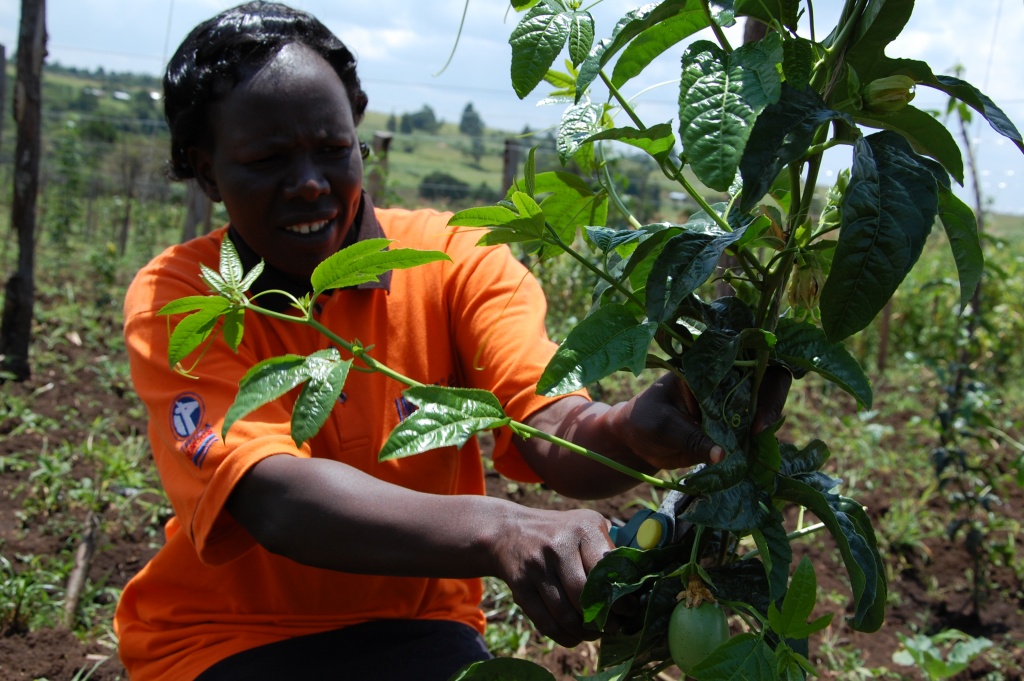
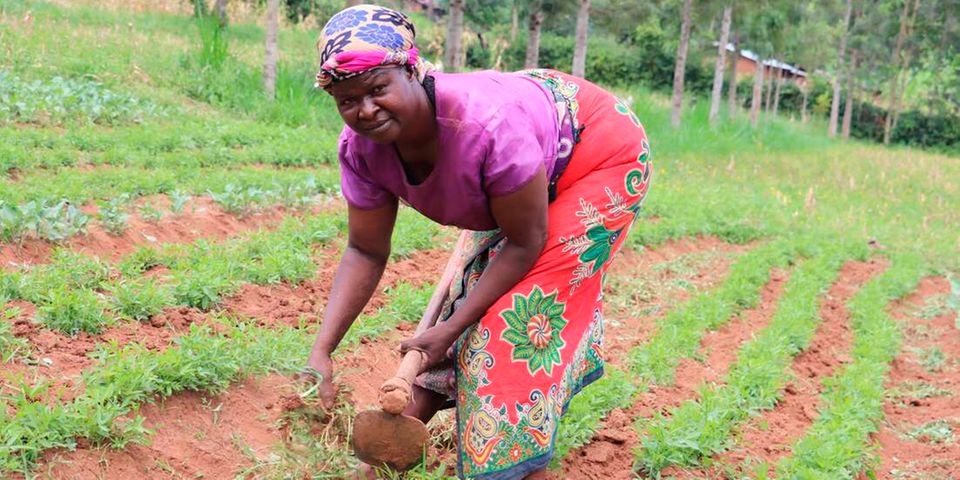
Jane Mung’ashia, a smallholder farmer in Wengondo, North Maragoli, is busy weeding her indigenous vegetables when the team arrives.
Soon, a neighbour arrives to buy the produce she has grown on another section of her farm.
“This is my source of income since 2019,” says the farmer who grows African nightshade and amaranth among other vegetables, adding she is working harder to ensure the crops cover her entire three acres.
Previously, Mung’ashia, a mother of six, grew maize and beans on her land but the returns were not good.
The maximum she could get was eight 90kg bags of maize per acre per annum, which earned her less than Sh30,000.
But things are better with indigenous vegetables. “I sell vegetables worth Sh800 per day. But every market day twice a week, I have specific traders who buy the vegetables in bulk worth Sh3,000,” she says.
From the vegetables, the farmer says she pays school fees for her children without a struggle and she is in the process of constructing a new house.
With the region’s good climate and significant rainfall throughout the year, some indigenous vegetable species can be harvested three weeks after planting.
Therefore, farmers can afford to have ready crop on the farms every single day throughout the year.
According to Mung’ashia, the idea of growing of indigenous leafy vegetables was sold to them through a community project dubbed Integrated Land and Forest Management project (ILFM), run by the county government, Kenya Agriculture and Livestock Research Organisation, Alliance for a Green Revolution in Africa (AGRA) and the Rural Outreach Africa (ROA).
Mung’ashia, a member of Mambai Lishe Bora farmers group which has 31 people, grows a variety of vegetables including Ethiopian kale (Kanzila), African nightshade (managu), spider plant (sagaa), Amaranthus, pumpkin leaves, vine spinach, cowpea (kunde), slender leaf and jute mallow (mrenda).
A few kilometres from Mung’ashia’s village, another group known as EverGro Self Help, also farms indigenous vegetables.
Adam Lwangu, 30, a trained electrical engineer, is among members of the group growing the vegetables. “I earn Sh1,200 on average daily from my two acres,” he says.
Doris Anjawa, the coordinator of ROA, says there are over 20 farmer groups with about 400 smallholder farmers growing indigenous vegetables in Vihiga.
“They have been doing this for the last four years. Since production has increased, we are in the process of identifying structured markets in Nairobi where they can supply and receive their pay month, instead of selling on the farm,” she says.
The county government is in the process of constructing a cold room where farmers can store their vegetables as they wait for the off-takers to pick them.
Evans Ochuto, the manager of Vihiga Community Seed Bank, where farmers store and get seeds, says there are more than 90 varieties of indigenous vegetable seeds at the facility. “We receive seed buyers from as far as Kitale in Trans Nzoia County. Our farmers produce the seeds,” says Ochuto.
John Macharia, the country manager AGRA, says it should not be business as usual for farmers as climatic conditions change.
“We have to diversify our diets to include indigenous foods that relate well with the prevailing environment, and use methods that are friendly to nature,” he said.
Indigenous vegetables have become popular among self-conscious Kenyans, especially in urban areas.
They contain phytonutrients, antioxidants, minerals and vitamins which contribute immensely to better health.