Peter Wambugu, who hails from Nyeri County is the forerunner of the popular Wambugu Apples’ Farm where an apple variety now known as Wambugu Apple is known to have originated.
He ventured into apples in 1985, and about 34 years later, it’s a victory story. The farmer says he tried his luck after striving a lot to find coffee produce market.
“Coffee is a headache to farmers in Kenya especially because of its poor pay. I decided to uproot the plants for apple farming,” he explains.
We find him walking around his farm checking on how apple plants sitting on three acres are faring, at Ngobit village, five kilometers from Nyeri – Nyahururu highway, Laikipia County and about one and half hours’ drive from Nyeri town.
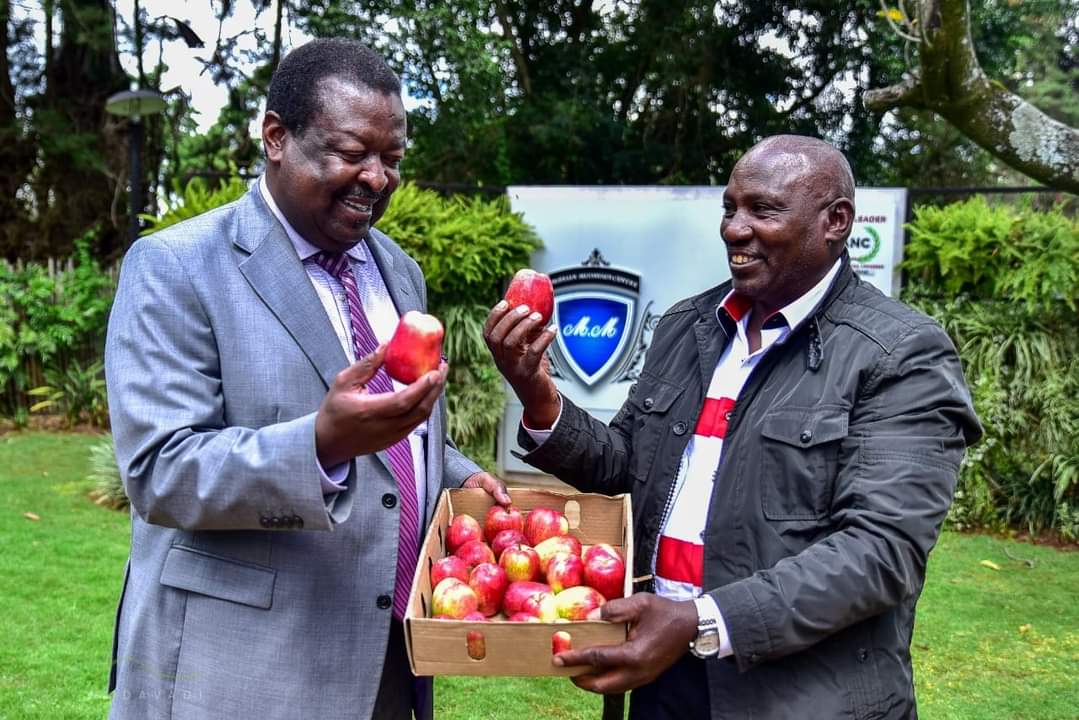
He picks and takes a bite of a mature and ready to harvest apple. “My clients applaud my fruits that they are not only sweet but have a great taste,” he says.
He is a jovial farmer, and he regrets no more quitting coffee farming for apples. In Kenya, most apples consumed are imported, estimated to be about 10,000 tones per year.
Apples are believed to perform well in cold regions, specifically coffee and tea zone areas. Cold climate enables them to abort leaves, a vital stage to allow the flowering process to take place. “Apple is a temperate fruit, which requires cold weather to break its dormancy. Cold stress them, resulting to the shedding of leaves,” he says, adding that temperatures of between seven to 10 degrees centigrade are ideal at that stage.
In Kenya, extreme cold season is experienced in the month of July, implying that locally grown apples can only be harvested once a year. This crop can be harvested two seasons per year if farmers use artificial method to break the dormancy. “Manually, remove all leaves and sprouting shoots. Two to three weeks later, apply a lot of water in the plants, they automatically start flowering and fruiting,” he explains, noting that flowering is the major problem in apples.
Although apples can flourish in different soil conditions, deep and well-drained soils are most ideal. Agronomists say soils with pH between 5.5 to 6.5 are preferable.
Wambugu, who is also a crop researcher, has managed to sail through apple farming. With the new grafted Wambugu Apples, he says the variety can as well be grown in semi-arid areas and harvested twice a year. Laikipia is among counties hard hit by drought in the country, but on his orchard the crop resists sun rays falling on them.
“I invented new Wambugu Apples in 2014, practically for the last five years they have been proven to perform well in both cold – humid and semi-arid areas,” he asserts. Unlike other apples which start fruiting two years after planting, Catherine Nyokabi, daughter, who is his sales and marketing manager, says this variety matures in nine months’ time.
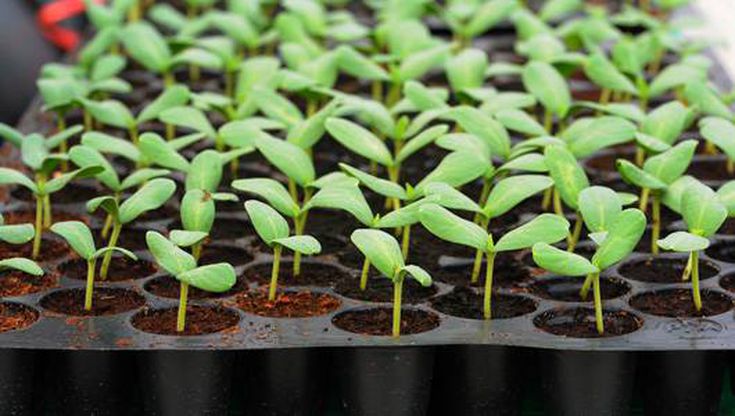
“Kenya Agricultural & Livestock Research Organization (Karlo) and the Kenya Plant Health Inspectorate Service (Kephis) approved it after a thorough analysis. In fact, it’s Karlo that named it Wambugu Apple,” says Ms. Nyokabi. Seedlings are well taken care of for two months in a nursery bed.
Each Wambugu Apple seedling goes for Sh1,000, and besides local clients, he says he has established a good market beyond Kenyan border. It’s important to note that, before exporting, the roots are thoroughly washed to remove soils.
According to Wambugu, apple farming is one of the most lucrative ventures that need no teacher for orientation. After land preparation, holes, two feet depth is dug. “Each should be two feet wide all around, with a spacing of eight feet from one plant to the other,” he explains, adding that inter-row space should also be eight feet.
He uses well-decomposed organic manure, which is mixed with topsoil, then put in the hole up to a height of one foot. The remaining space is for maintaining the plants with manure and water.
An acre can accommodate about 500 trees. Success in apple farming is attributed to feeding the plants with sufficient water and manure, Wambugu saying he prefers using cow dung, sheep, goat, and chicken’s droppings. Though, he says one is not limited to using inorganic manure, such as fertilizer especially during top-dressing.
credit; standardmedia.co.ke