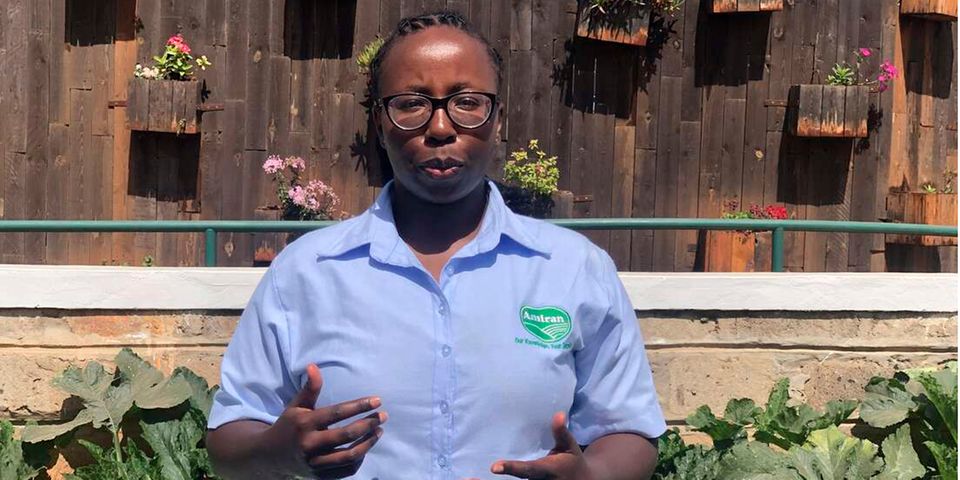
Lilian Ng’endo is the Amiran Kenya Ltd seed agronomist for Nairobi Metropolitan. She spoke to Rachel Kibui on how seed production has changed amid the effects of climate change and why farmers should go for certified products
The weather patterns have become extremely erratic due to climate change. What are seed manufacturers doing to address such challenges?
Climate change has brought many challenges but seed makers are working to get optimal breeds for different climatic conditions. Various trials are done on the varieties to ensure that they are most ideal for cultivation in different regions and climatic conditions. This ensures that farmers get the right seeds for each environment and weather condition. As a country, we have the capacity to get to very high productivity despite ongoing effects of climate change through quality seed production.

The number of seed manufacturers has increased significantly and so is the supply of seeds but why are prices still exorbitant?
It all boils down to cost of production, high productivity and early maturity of hybrid seeds. While open pollinated seeds may be inexpensive compared to hybrids, the latter ensure significantly higher yields, mature faster, but have an extensive production process.
That said, the benefit is that the input used when you invest in hybrids, including fertiliser and spraying, is less compared to the open pollinated seed varieties. This explains why seeds – especially the hybrids – are still expensive. However, the investment is worth the cost for the farmer because they are assured of higher yields.
How should the challenge of fake and uncertified seeds in the market be dealt with?
While there have been efforts put in place – especially by the Kenya Plant Health Inspectorate Services (Kephis) – to address this challenge, we still have unscrupulous individuals managing to manoeuvre around. There needs to be sufficient and continuous training of farmers to ensure that they know the tactaics the cons use and can counter them.
What is your take on seed recycling by some farmers?
Seed recycling should be discouraged because of decline in superiority of the product over time. Productivity from F1 hybrids is evidently good, but when you recycle them (F2), their productivity (and other qualities) declines greatly.
Recycling of seeds also transfers some of their poor qualities, including pest and disease susceptibility, to the next generation of crops cultivated resulting to more production costs and even losses for farmers. In our case, we have hybrids for tomatoes (Lakshmi F1), watermelon (Maridadi F1), onion (Neptune F1), collard (Ahadi F1) pepper (Marvel F1) and broccoli (Destiny F1) and so on. Other crops with hybrids are cucumber, lettuce, cabbage, sweet melon, eggplant, spinach, cauliflower, peas, beans, beetroot, cotton, brachiaria, and okra varieties.
On the other hand, there are open-pollinated varieties of butternut, cucumber, carrot, tomato, pepper, watermelon, okra, cabbage, leek, beetroot, collard, eggplant and collards. Farmers have a wide range of seeds they can choose from for higher yields.
You recommend horticultural crops such as onions, tomatoes, broccoli, pepper or collard greens as some of the most profitable to invest in. For someone seeking to farm these crops, what would be your advise?
The farmer should always first check for markets before starting any venture, especially when they are doing it as an agribusiness. This ensures that when the crops are ready for harvest, there is market minimising the risk of post-harvest losses.
Soil testing is another key factor that the farmer should consider. Identifying the right soil conditions in your area determines the crop to invest in and the seed varieties to plant. Always consult experts on the types of seeds and crops to grow in an area.
Attend trainings and interact with field extension officers and other farmers.
Farmers also need to always remember that cheap is expensive in the long run. Going for inexpensive or recycled seeds will necessitate that you spend more on other inputs such as fertilisers, and crop protection products.
Credit; https://nation.africa/kenya/business/seeds-of-gold/why-you-should-always-plant-certified-seeds-3830212